
By Clyden Manikkam, Co Founder/Chief Revenue Officer of FM Insure
By now, we know the story, IRD has been more active and is making better use of technology to help them reach their compliance goals. Following the Covid era, IRD has sharply increased its compliance work. It’s opening more audits which includes pre-audit activity, finding more tax and asking more questions of businesses and their accountants.
In this article we set out what the public data shows, what IRD itself is saying, and what our own FeeCover claims tell us about where IRD is focussing their energy.
More funding, more audits
The rise in audit activity follows a deliberate decision and goal by the Government. Budget 2024 gave Inland Revenue about $116 million over four years for compliance work, and Budget 2025 added $35 million a year of permanent funding.
That investment shows up in IRD’s own figures. Its 2025 Annual Report compares the year to 30 June 2025 with the year before:
| Measure | 2023–24 | 2024–25 | Change |
|---|---|---|---|
| Audits opened | 5,100 | 7,600 | +49% |
| Audits closed | 4,300 | 6,100 | +42% |
| Additional tax assessed from audits | $460m | $1,026m | +123% |
| Return per $1 spent on compliance | $9.50 | $11.81 |
Source: Inland Revenue Annual Report 2025
At nearly $12 back for every dollar spent, it’s an ROI to envy and one that any sensible organisation, business or person would take. Compliance is one of the best-returning investments the Government makes and that’s a strong reason to expect this level of activity won’t be stopping anytime soon.
The trend is continuing
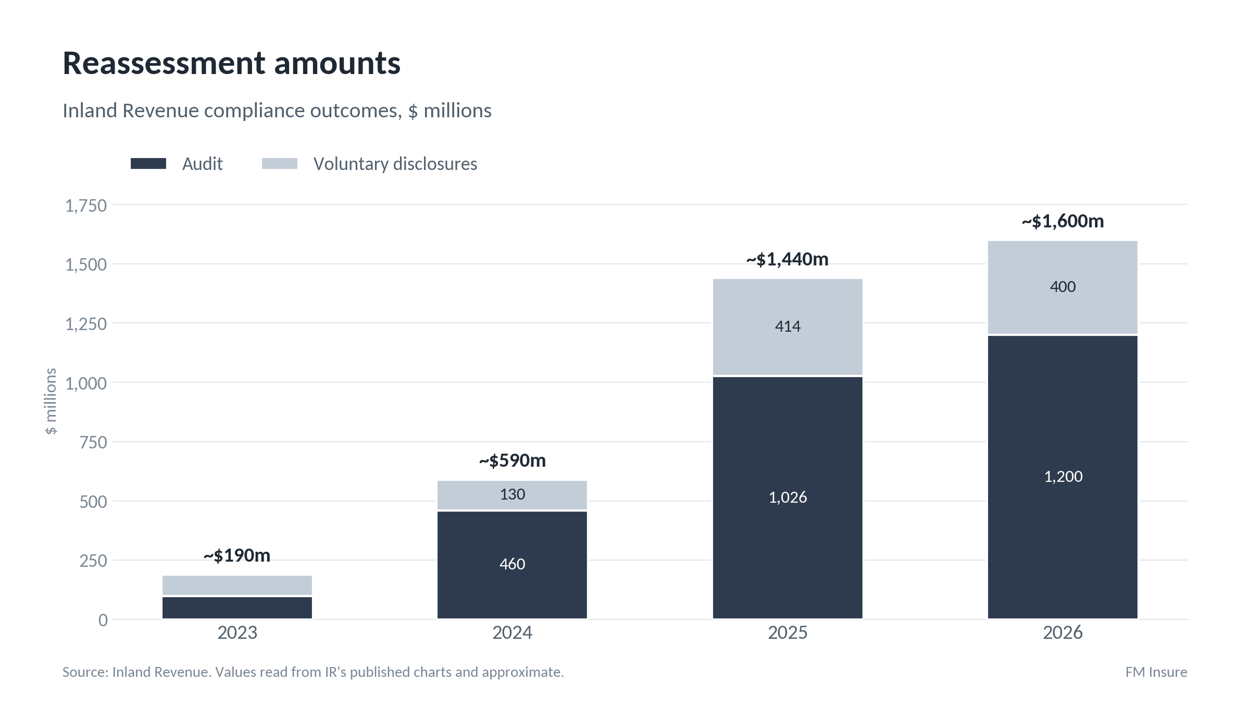
More recent IRD data shows that this is carrying on into 2026. Both reassessment amounts and case numbers have risen every year since 2023. The IRD reassessed about $1.6 billion in the period from July 2025 – June 2026. $1.2 billion of this has come from audits and the rest from voluntary disclosures. This is up from around $200 million in 2023.
The rise of the ‘pre-audit’ phenomenon
A tax audit today should be viewed as as pre-audit and a full audit. What exactly is a ‘pre-audit’? Crudely, a pre-audit is IRD running a sniff test and if something smells off, those cases progress into a full audit. These are activities such as risk reviews, queries or investigations into filed returns.
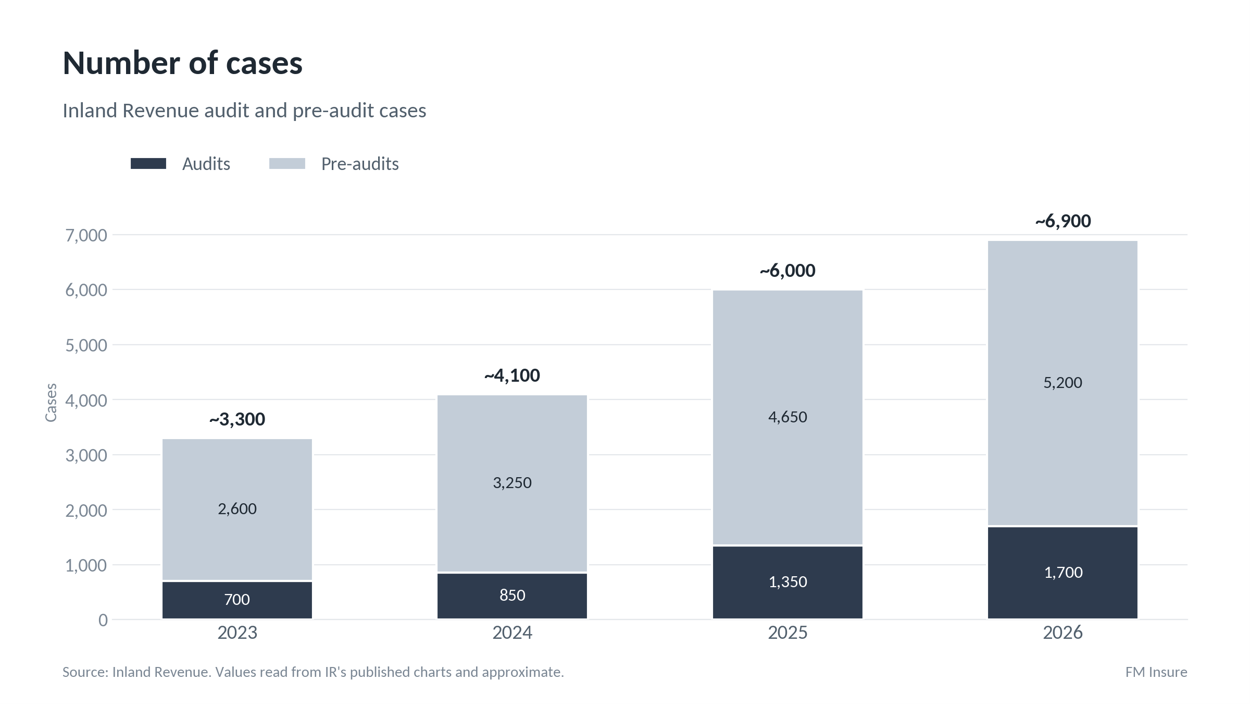
The data below shows that just under 7,000 cases closed in July 2025 – June 2026, of which, for every three pre-audit cases, IRD ran about one full audit. This translates into roughly 5,200 pre-audits and 1,700 full audits.
Pre-audits still require time and may need expertise to respond to properly. This can result in unexpected compliance costs for businesses and if this progresses into a full audit, the cost increases further.
GST is now a major focus
There appears to be a particular focus on GST. Deloitte found that GST shortfall penalties in 2025 reached almost $8 million, the highest in about 15 years. It was also the first time GST penalties were higher than income tax penalties since records began in 2011. Our own claims processed in the year to August 2026 are consistent with this finding.
At the end of August 2026, FeeCover claims break down as follows:
- 53% involved GST reviews. This is by far the largest category, in line with IRD’s increased focus on GST.
- 32% involved income tax reviews. These include reviews of income tax returns and foreign income.
- 15% related to other matters, such as property transactions, information requests and KiwiSaver deductions.
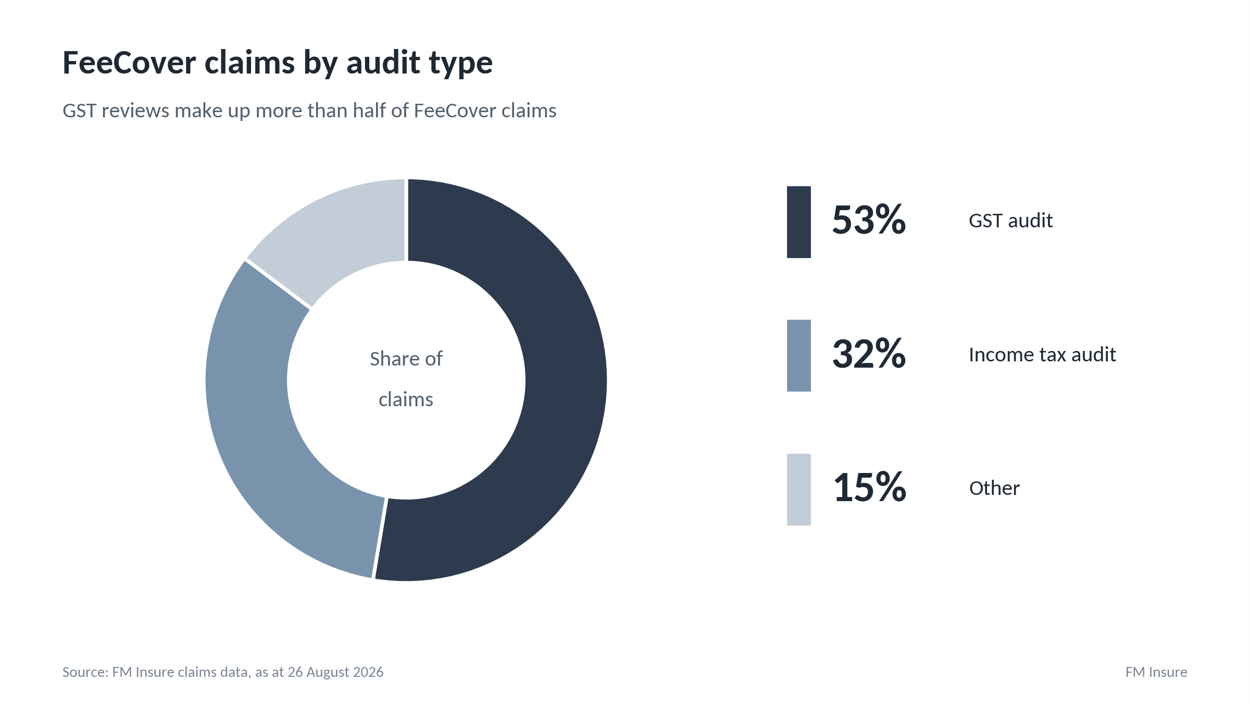
Many of these claims came from pre-audit activity, not full audits. That’s an important point. A review can sound minor, but it still needs a careful, accurate response, and that usually means paying for your time. Answered poorly, a simple request can grow into a bigger, more expensive problem.
Is Auckland a hotspot?
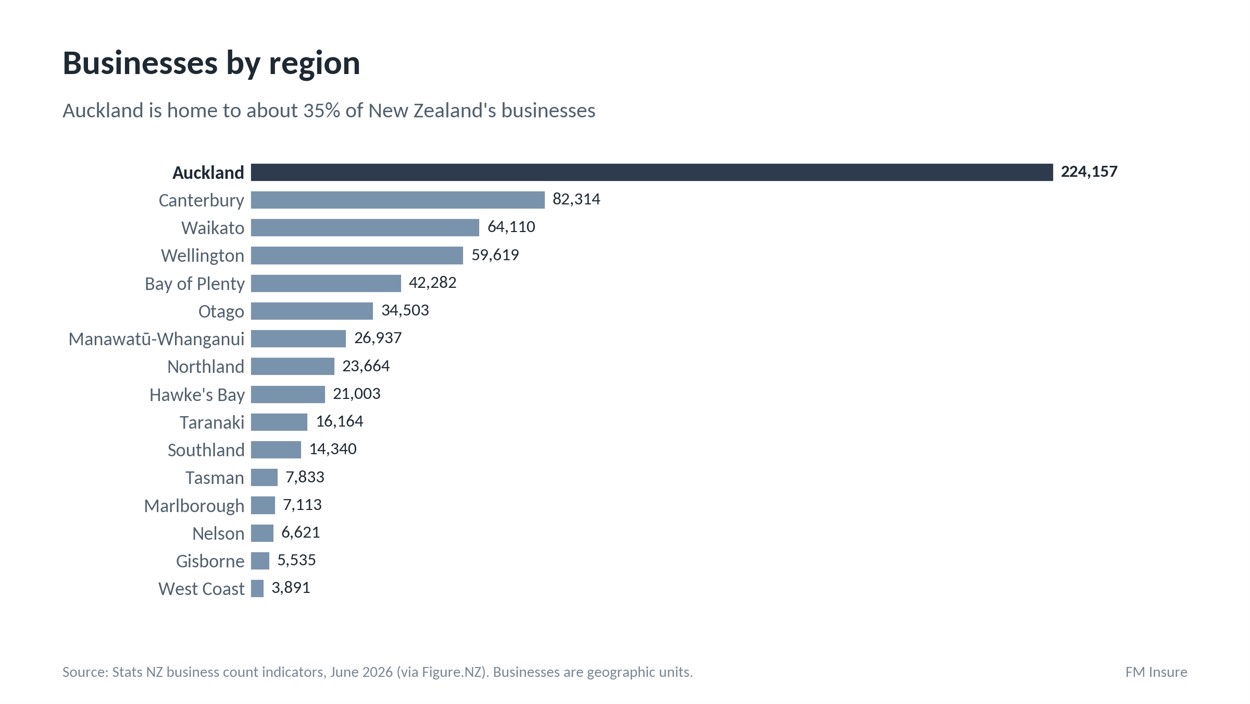
IRD’s data on closed cases shows 43% were in Auckland. In this regard, size actually matters: Stats NZ counts about 35% of New Zealand’s businesses in Auckland (224,157 of 640,086 at June 2026) which matches very closely its population share – about 34% of New Zealanders live there.
But Auckland’s share of cases is still a bit higher than its share of businesses and people. What this suggests is that IRD’s attention may be weighted towards activity concentrated there, such as property.
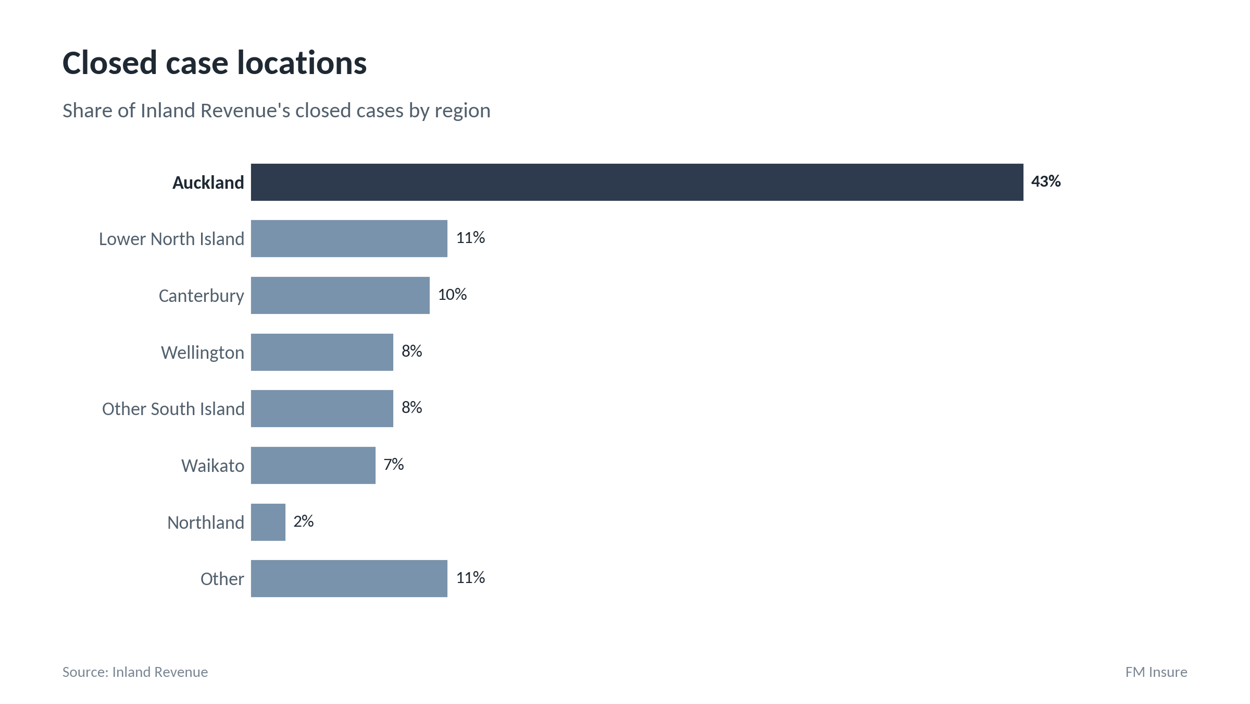
Just as important, 57% of closed cases were outside Auckland. They came from Canterbury, Wellington, Waikato, Northland, the lower North Island and the rest of the South Island. With IRD relying more on data-matching and third-party information, there’s little comfort in not being in Auckland.
Keeping it in perspective
These figures have limits worth keeping in mind. More audits don’t mean more wrongdoing and ‘doing a good job’ when you file a return doesn’t guarantee you won’t get audited. Some of the increase reflects IRD returning to more normal levels after the quieter years during Covid and they’ve returned with more money, better tools and a strong financial reason to keep going.
Businesses of every size, in every region, are significantly more likely to hear from IRD than they were a few years ago and that’s no one’s ‘fault’, this is a normal symptom of a modern tax regime that is delivering results.
Be ready before the letter arrives
The best time to prepare for an IRD review is before it starts. FeeCover pays the professional fees for responding to IRD enquiries, reviews and audits, so cost never gets in the way of the right outcome. Accounting practices can cover their whole client base with FeeCover Edge, and individual businesses can take out FeeCover Individual to gain peace of mind instantly despite the increased pressure.*
Click here to set up a meeting with Clyden to discuss how to protect your firm using FeeCover
*FeeCover policies are provided by FM Insure as licensed FAP (1010580) and are compliant with the Fair Insurance Code. The policy is subject to terms as provided in our policy disclosure statement.
We’ve put this article together to give you a helpful overview of the topic, but it is for general information purposes only. While we aim to be accurate at the time of publication, rules and interpretations can change. Because of this, you shouldn’t rely on this information to make decisions. We cannot accept liability for any inaccuracies, errors, or omissions. Please make sure to verify the details independently or chat with your professional advisor about how this applies to your specific situation.
 |
About the author Clyden Manikkam is Director and Cofounder of FM Insure. With a background spanning senior roles at IRD, including investigations and prosecutions, plus nearly a decade in the tax pooling industry as a sales/strategy Director, he has a rare insider’s understanding of the challenges accountants face. Clyden is passionate about building solutions that make a genuine difference for accounting firms across New Zealand. |